Transport in Review Fiji 2026 Released
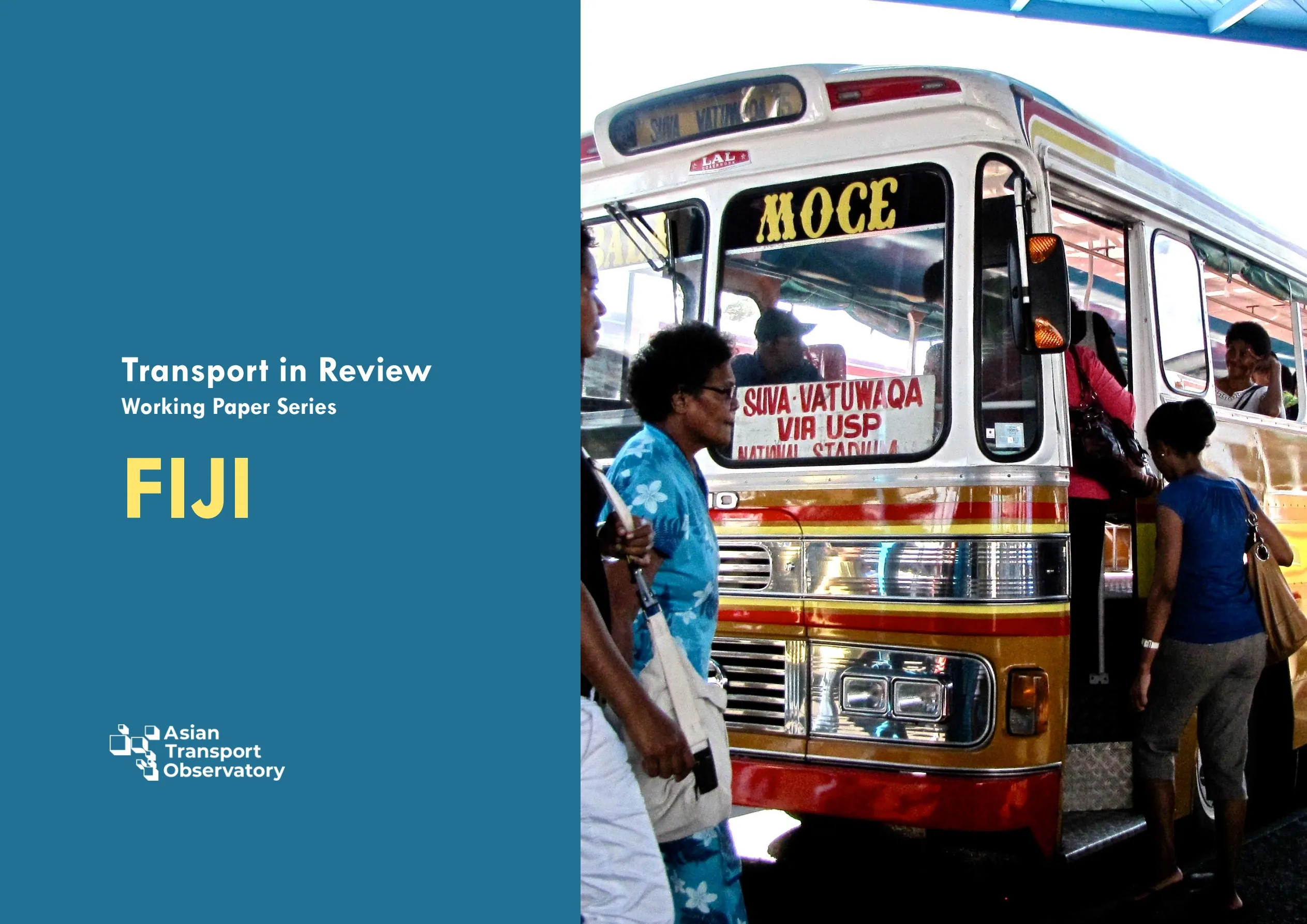
The Asian Transport Observatory (ATO) has released a new working paper under its Transport in Review series, presenting a comprehensive assessment of Fiji's transport system at a critical juncture. Building on ATO's multi-dimensional analytical framework, the report examines the sector across connectivity, access, safety, climate resilience, and institutional performance—providing an integrated view of how transport supports, and constrains, national development.
Transport plays a central role in Fiji's economy and spatial structure. Contributing around 13% to GDP and supporting approximately 8% of employment, the sector underpins tourism, trade, and social connectivity across a highly dispersed island geography. At the same time, this dependence exposes systemic vulnerabilities. Infrastructure networks—particularly roads, ports, and inter-island links—face increasing pressure from aging assets, limited maintenance capacity, and growing demand in both rural and urban contexts.
Geography remains the defining constraint. As an archipelagic state, Fiji relies heavily on maritime and aviation systems for both domestic and international connectivity. While maritime transport accounts for the vast majority of trade flows, the system is constrained by aging fleets, limited port capacity, and high operating costs. Aviation serves as a critical lifeline for tourism and global integration, yet remains sensitive to external shocks and structural limitations. On land, the road network—despite being the most extensive asset—continues to face challenges in quality, maintenance, and resilience.
Access disparities persist across both rural and urban areas. While overall connectivity is relatively high, significant gaps remain for remote populations, with thousands still lacking reliable access to all-season roads. In urban centers, particularly the Greater Suva Area, rapid growth is intensifying congestion and placing strain on existing infrastructure, highlighting the need for more efficient, higher-capacity public transport solutions.
Climate change and resilience emerge as central themes across all modes. With a large share of infrastructure located in vulnerable coastal zones, transport systems are increasingly exposed to extreme weather events and long-term climate risks. At the same time, the sector remains a major contributor to national emissions, driven by heavy reliance on imported fossil fuels. This creates a dual challenge: improving resilience while accelerating the transition to low-carbon transport systems.
The working paper highlights a set of cross-cutting priorities. These include shifting toward lifecycle-based asset management, strengthening multimodal integration across road, maritime, and aviation systems, improving rural accessibility, and advancing climate-resilient infrastructure. It also underscores the importance of aligning investments, policies, and institutional frameworks to support long-term system performance rather than short-term fixes.