New ATO Transport in Review working paper explores Papua New Guinea’s transport challenge: connecting a country shaped by geography
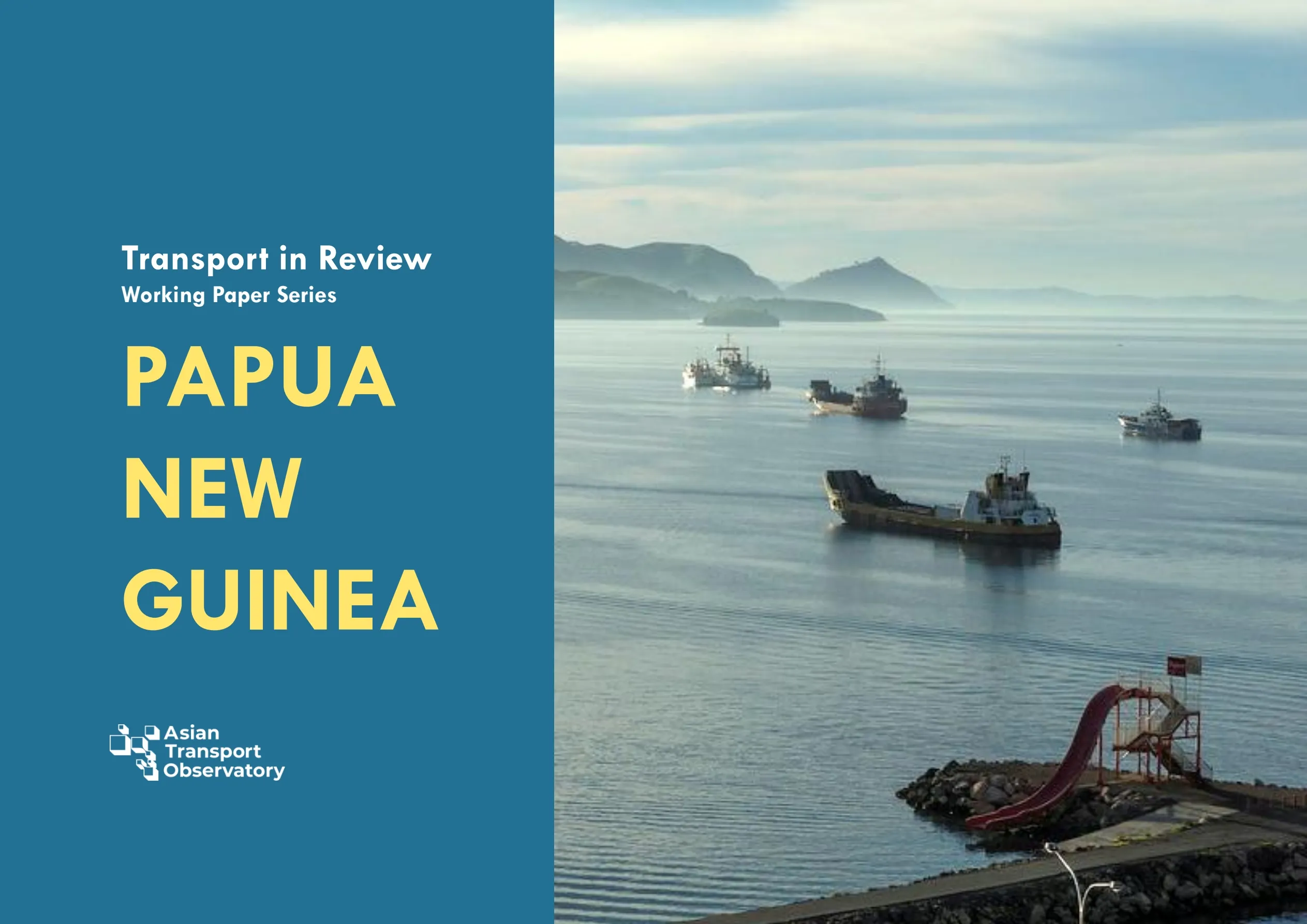
Papua New Guinea's geography makes transport central to national development. Rugged mountains, remote valleys, dispersed islands, and long coastlines mean that roads, ports, airports, and rural access links are not just infrastructure assets. They are lifelines for trade, agriculture, health services, education, and social connection.
The Asian Transport Observatory's new Transport in Review: Papua New Guinea working paper discusses a sector that is essential to the economy, but also under pressure from maintenance gaps, climate risks, safety challenges, and uneven access.
Roads remain the backbone of domestic connectivity. Papua New Guinea has around 50,000 kilometers of roads, but condition and reliability matter more than total network length. Only about 32% of roads are rated in good condition, while 35% are classified as poor and a quarter of the network remains unsurveyed. With only around 11% of roads paved, rural and highland communities face persistent barriers to markets, services, and opportunities.
The country is responding through major reforms and investment programs. The Connect PNG Program aims to strengthen national connectivity by 2040, including strategic economic roads, missing links, provincial and district roads, and bridges. At the same time, the Road Maintenance and Management Program marks an important shift toward asset-based management and a “maintenance first” approach. This is critical: annual road maintenance needs are estimated at around USD 195 million, while current allocations cover only about a quarter of requirements.
Transport access remains highly uneven. Around 86% of the population lives in rural areas, and many communities still lack reliable all-weather road access. In Port Moresby, only about 23% of residents have convenient access to public transport, well below the Pacific regional average. Public motor vehicles help fill the gap, but services often operate informally, with limited schedules, safety oversight, and regulatory coverage.
Safety is another urgent priority. Road crashes resulted in 17.7 deaths per 100,000 people in 2023, making road injury a major public health and economic issue. The estimated cost of road crash fatalities was about USD 969 million, equivalent to around 4% of GDP. Improving road safety is therefore not only a social priority, but also an economic one.
Climate resilience is equally central to Papua New Guinea's transport future. Flooding, landslides, and extreme weather events already generate substantial annual losses to
transport infrastructure, with roads accounting for most of these losses. As climate risks intensify, transport planning must increasingly integrate resilient design, risk-informed asset management, and sustained maintenance financing.
There are important grounds for optimism. Papua New Guinea is strengthening transport institutions, expanding key corridors, investing in ports and airports, and improving the policy basis for maintenance and climate resilience. The challenge now is to sustain this momentum, ensuring that new infrastructure is matched by the financing, governance, and institutional capacity needed to keep it working.
For Papua New Guinea, sustainable transport is not a narrow sectoral issue. It is central to national connectivity, economic diversification, rural development, climate resilience, and inclusive growth. The choices made today will determine whether transport remains a constraint—or becomes a foundation for a more connected and resilient future.
Click HERE to access the report.