ATO Highlights the Need for People-Centered Mobility at Bangkok Climate Action Week 2026
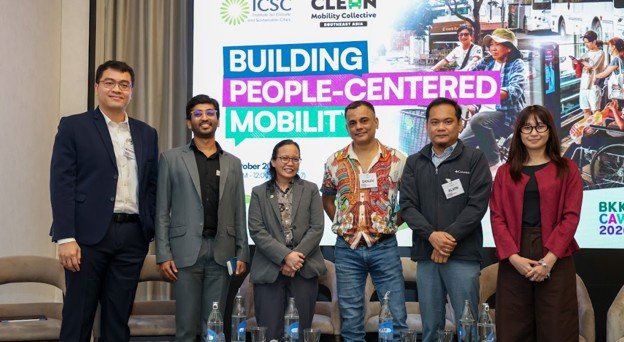
The session, titled “Building People-Centered Mobility: Where Does the Shift Need to Happen in South and Southeast Asia?”, was organized by the Institute for Climate and Sustainable Cities (ICSC) under the Clean Mobility Collective (CMC), bringing together 60 participants from different countries and professional backgrounds, including civil society organizations, researchers, transport practitioners, advocates, and development stakeholders.
ATO Co-Team Lead Alvin Mejia delivered a presentation titled “State of Play: Road Transport in South and Southeast Asia,” providing a data-driven overview of regional transport trends, challenges, and opportunities. The presentation helped frame discussions on the gaps between policy ambitions and implementation, and the actions needed to accelerate the transition toward sustainable mobility.
Regional Progress and Persistent Challenges
Drawing on ATO's regional databases and analytical work, the presentation highlighted several important trends:
- Access remains unequal. Rural road access has reached 98% in South Asia and 93% in Southeast Asia, yet approximately 42 million rural residents across the two subregions still lack access. Urban public transport accessibility also remains a significant challenge.
- Transport emissions continue to grow despite efficiency improvements. While transport energy intensity has declined substantially in both subregions, Asia's road transport greenhouse gas emissions increased by an average of 2.1% annually between 2015 and 2025.
- Urban mobility is shifting toward private transport. An analysis covering 142 cities in South and Southeast Asia found that private transport gained modal share in 94% of cities between 2018 and 2023, while active transport lost share in 94% and public transport declined in 56%.
- Electrification is progressing, but broader systemic changes are needed. Growing electric vehicle adoption must be accompanied by cleaner electricity generation and sustained investments in public transport, walking, and cycling.
- Road safety and climate resilience remain pressing priorities. Under a business-as-usual scenario, road fatalities in South Asia could increase by 30% above 2021 levels by 2030, while exposure of road infrastructure to flooding underscores the importance of climate-resilient transport networks.
Following ATO's presentation, a moderated discussion brought together representatives from organizations working on sustainable mobility across South and Southeast Asia, including ATO, ITDP Indonesia, Asar Social Impact, ICSC, and the Climate and Sustainability Initiative.
The exchange explored practical challenges in translating transport policies into action, mobilizing investments, strengthening civil society participation, and ensuring that mobility transitions respond to the needs of communities. The discussions reinforced the importance of going beyond technological solutions to address broader issues of transport accessibility, affordability, equity, and institutional capacity.
Supporting the UN Decade of Sustainable Transport
The event took place during the first year of the United Nations Decade of Sustainable Transport (2026–2035), providing an opportunity to connect regional experiences with the Decade's objectives.
ATO's contribution underscored the importance of evidence-based decision-making in identifying transport investment priorities, monitoring progress, and supporting integrated approaches to sustainable mobility.