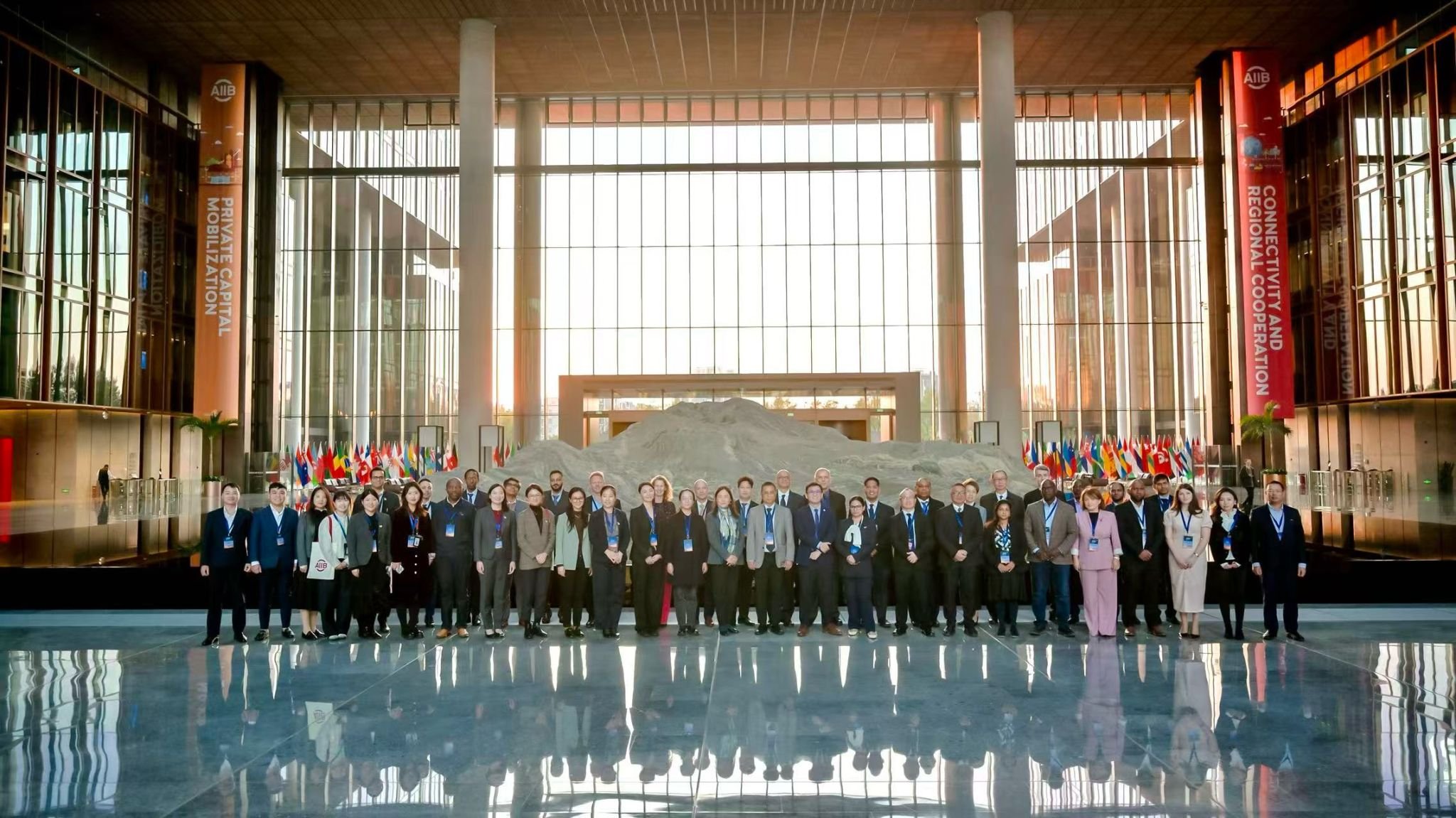
AIIB Transport Knowledge Week 2025
By 2052, global demand for air travel will rise to 25 billion passengers annually. This is not just a goal; it is a trajectory. It presents policymakers with a challenge: the relentless drive for mobility clashing with the stiff goal of achieving net-zero emissions. The industry can no longer just expand but transform.
During the Asian Infrastructure Investment Bank (AIIB) Transport Knowledge Week 2025 in Beijing, we scrutinized the underlying physics of this growth beyond the mainstream narrative. The Asian Transport Observatory (ATO) provided the evidence. The data illustrates that the Asia-Pacific region is not only the leading force behind global movement but also faces the most complex decarbonization challenges.
The Connectivity Paradox
We often assume growth fosters connection, but data suggests otherwise. The Asia-Pacific region, hosting a quarter of the world's airports, is a major hub. However, its network is breaking apart. From 2019 to 2025, Asia-Pacific was the only region globally to see a decline in its international network, losing 228 international airport pairs. Recovery has been uneven. Passenger numbers have increased, yet the network has shrunk as airlines focus on high-yield routes, abandoning the broader pre-pandemic network. While efficiency improved, access decreased. Internally, the situation is even clearer. India added 150 new airport pairs, and Mainland China rebalanced its large capacity, but elsewhere the region experienced a stagnant "lost era"—more passengers flying between fewer destinations.
The Infrastructure Chasm
The physical infrastructure needed over the next decade is immense. To meet the forecasted demand, the region's aerodrome area must nearly quadruple, growing from 6,000 to about 23,000 square kilometers by 2035. This scale of expansion requires capital that currently does not exist. The annual cost of aviation infrastructure in the region is around $150 billion, but our current resources are insufficient. Official Development Assistance accounts for just 0.3% of this need, while Public-Private Partnerships —despite Asia contributing 90% of the global total since 2015—cover less than 5%. This isn't merely a funding gap; it's a significant capital deficiency. Existing financial mechanisms are essentially irrelevant to the scale of the challenge requirement.
The Energy Friction
Here's a bleak reality: aviation is set to be the fastest-growing energy consumer this decade. Asia's domestic aviation emissions are rising by 4.3% each year, now making up 40% of the region's total aviation emissions. Existing policy tools are ineffective. Analyzing the State Action Plans of several Pacific nations shows a projected fuel reduction of only 6% by 2050, which is far from achieving Net Zero. Instead, it outlines a path toward greater climate responsibility. Sustainable Aviation Fuel (SAF) is currently the only feasible bridge, but its cost remains high due to limited volume and premiums. The market alone won't drive this change; strong policy intervention is essential.
Hard Choices
The core issue isn't technical but economic and political. Passenger demand is expected to double, yet our existing financial tools only address a tiny part of the $150 billion needed annually for infrastructure. Moving from a period of connectivity setbacks to a net-zero future won't happen through market forces alone; it requires strong policy actions, such as those implemented by Singapore, India, and Japan through their new SAF mandates. As the UN Decade of Sustainable Transport begins, the goal isn't just to handle more passenger traffic, but to ensure that this mobility isn't a climate burden.