Transport in Review Kiribati 2026
Transportation lies at the core of Kiribati's development and resilience challenge as the country confronts extreme geographic dispersion, acute climate vulnerability, and constrained institutional capacity. With around 120,000 people spread across 33 low-lying atolls over an ocean area of 3.5 million square kilometers, transport is not simply an economic sector but a critical lifeline linking communities to essential services, markets, and opportunities.
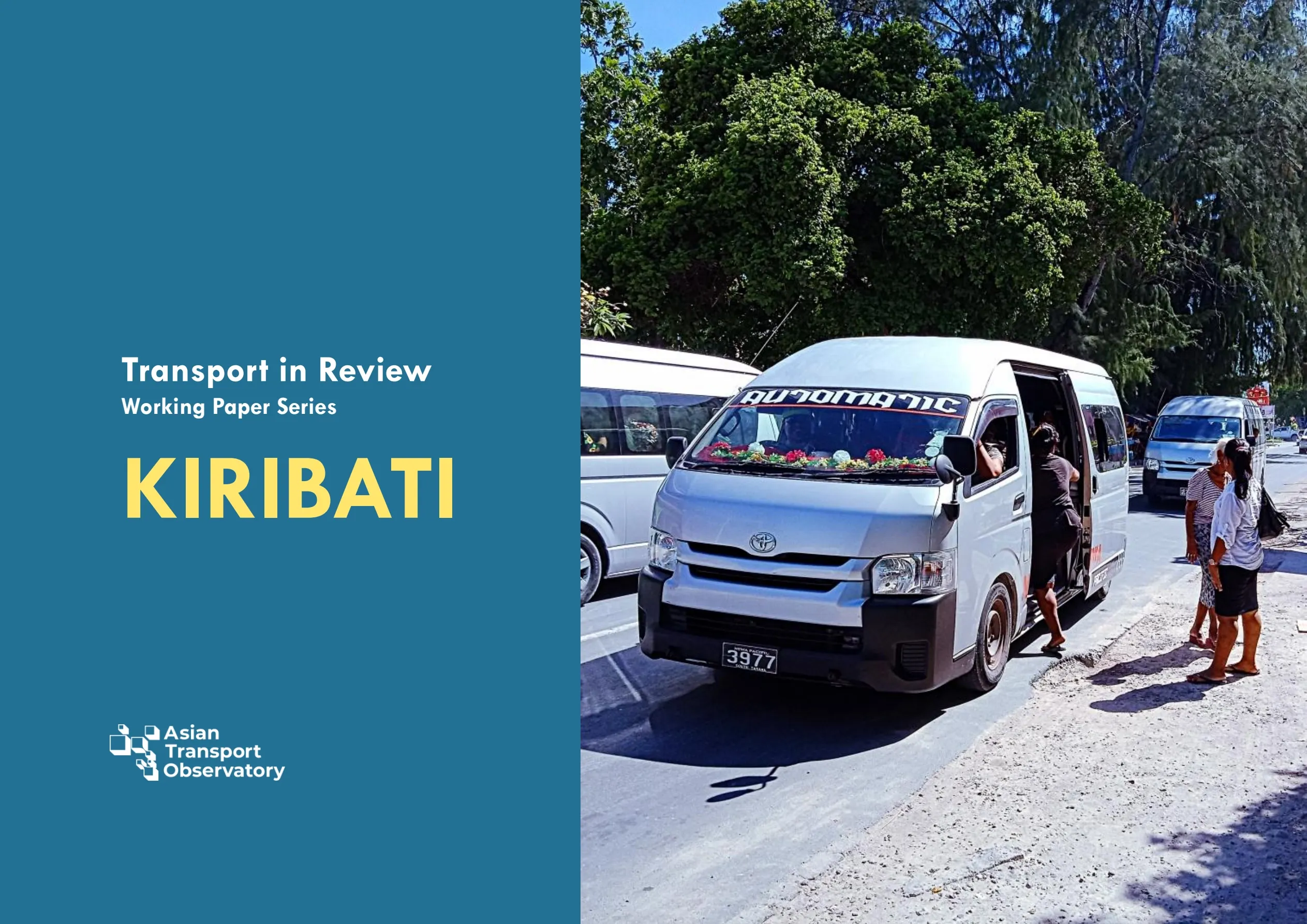
Transport plays a central role in enabling connectivity across the islands yet continues to face persistent structural constraints. Road networks are limited and highly exposed to coastal erosion and flooding, maritime transport depends on aging infrastructure and vessels, and aviation remains constrained by low frequencies and deteriorating outer-island runways. Access gaps remain pronounced between South Tarawa and the outer islands, where damaged causeways, unsealed roads, and weak maritime "last mile" connections limit year-round mobility. Urban mobility pressures are intensifying in South Tarawa as rapid population growth and rising vehicle ownership outpace infrastructure capacity, while public transport remains largely informal. At the same time, transport accounts for roughly one-third of national energy use and greenhouse gas emissions and remains fully dependent on imported fossil fuels, amplifying exposure to external price shocks and climate risks. Given that most transport assets are in low-lying coastal areas, resilience and decarbonization are inseparable priorities.
The report underscores the opportunity to strengthen economic and social resilience through improved maintenance, safer and more reliable inter-island connectivity, more equitable access to transport services, and climate-resilient, low-carbon solutions tailored to the realities of a highly dispersed atoll nation.
The development of this report has been supported by the Asian Development Bank, the Asian Infrastructure Investment Bank, and the World Bank.