ATO contributes to High-Level Meeting on the Strategic Plan on Enhancing Rail Interoperability in ASEAN
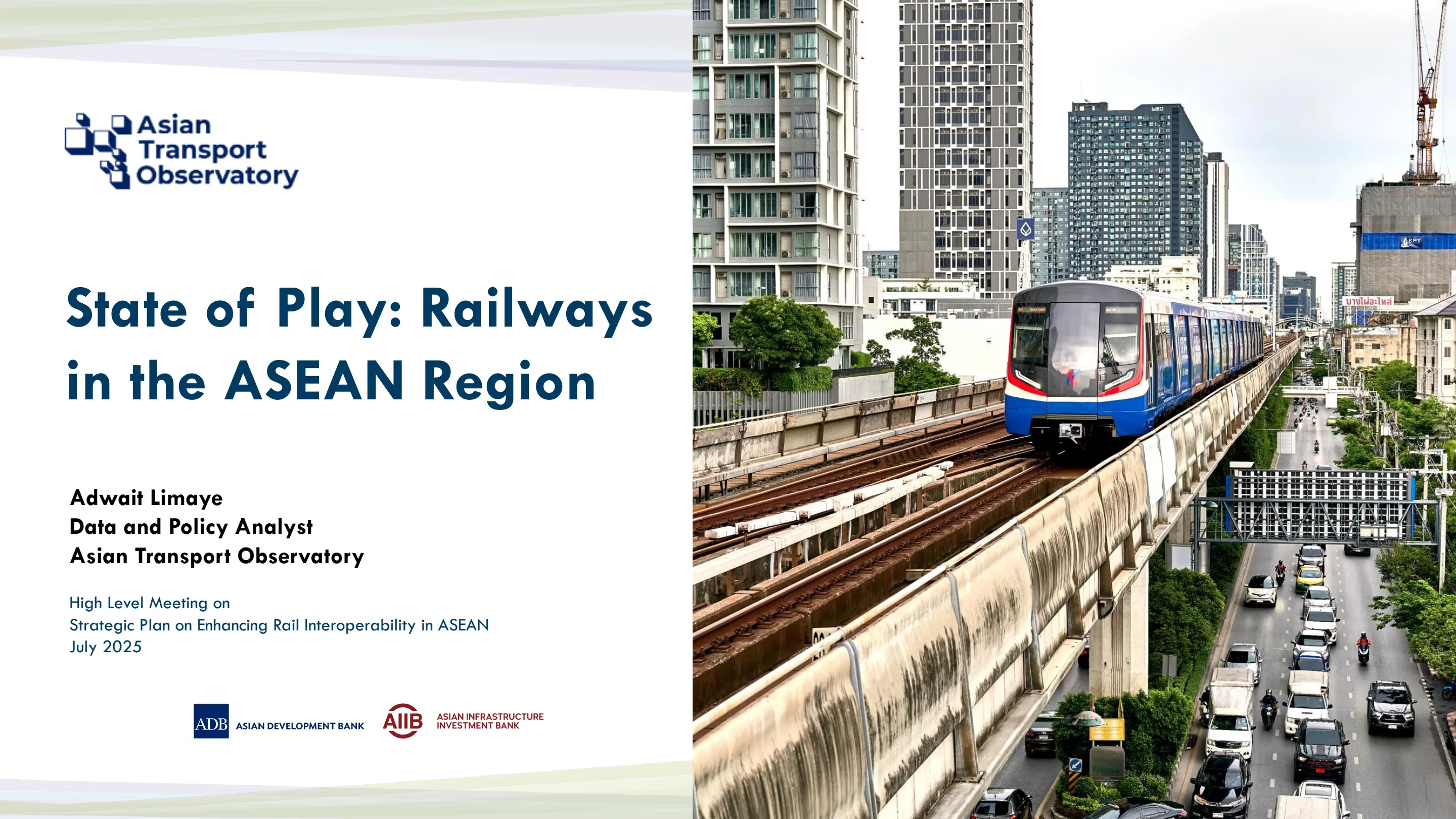
At the UNESCAP High-Level Meeting on the Strategic Plan on Enhancing Rail Interoperability in ASEAN, held from 16-17 July 2025 in Vientiane, Lao People’s Democratic Republic, Adwait Limaye, Data and Policy Analyst at the Asian Transport Outlook (ATO), delivered a presentation on the "State of Play of Rail Transport in ASEAN Region".
The presentation outlined the key trends, gaps, and emerging opportunities in the railway sector across Southeast Asia. Drawing from ATO’s multi-year data efforts, the session provided a regional snapshot and helped situate current investments, outcomes, and risks within a broader policy and planning context.
Key insights included:
- ASEAN rail infrastructure has grown, but at a slower pace than roads, with urban rail networks remaining concentrated and limited in scale.
- Utilization of rail is declining, raising concerns over efficiency and the return on growing rail investments.
- Imports of rail equipment have grown moderately, while development financing for rail—both ODA and PPP—has significantly increased.
- Energy intensity in rail has halved since 2005, and electrification has improved, yet Southeast Asia’s share of rail CO₂ emissions in the region is rising.
- Climate vulnerability remains high for rail infrastructure, despite its small share in total transport infrastructure—prompting the need for resilience planning.
- Country targets reflect diverse priorities—ranging from modal share and accessibility to energy sustainability and high-speed rail aspirations.
The presentation closed by highlighting the need for a regionally coordinated push toward efficient, inclusive, and climate-resilient rail systems.